
Display panel quality, processor energy efficiency, and camera sensor size are the smartphone specs that actually matter 2026, as these components impact real-world performance more than high megapixel counts. Prioritizing efficient battery management and actual storage speed over marketing gimmicks like virtual RAM ensures a device remains fast and reliable for years.
It is 2026, and smartphone manufacturers are still trying to sell you on five hundred megapixel cameras and three thousand nit displays that your eyes cannot even process. You likely feel the frustration of spending a thousand dollars on a device that stutters during simple multitasking or dies before dinner time; this happens despite the impressive spec sheet. This disconnect exists because brands prioritize buzzwords over the actual user experience. In this guide, we strip away the marketing fluff to focus on the hardware that dictates your daily satisfaction. We will break down why sensor size triumphs over pixel counts, how to evaluate real world battery longevity, and which processing architectures provide the best value for your investment. By the end, you will know exactly which numbers deserve your attention and which ones are merely expensive distractions.
Why Smartphone Marketing is More Confusing Than Ever in 2026
Walking into a phone store in 2026 often feels like entering a high-stakes math competition. Smartphone brands are currently locked in an arms race, throwing massive numbers at customers that rarely reflect how a device actually performs during a busy day in Ephraim. From the latest Samsung Galaxy S25 to the iPhone 17 Pro, the marketing focus has shifted toward aggressive generative AI capabilities and astronomical megapixel counts. While these features look impressive on a glossy spec sheet, they often act as expensive distractions for the average user.
In Sanpete County, most people need reliable tools rather than gadgets that boast about unproven technology. A 200-megapixel camera might sound revolutionary, but if the sensor is small or the software processing is sluggish, that number is essentially meaningless. At All Things Phones, we act as a local filter for our neighbors. We look past the hype to identify the smartphone specs that actually matter 2026 for real-world longevity and utility. Our goal is to ensure you do not overpay for technical fluff you will never use. If you are feeling overwhelmed by the options, you can always visit us for device setup and support tailored to your specific daily habits.
Processor and RAM: The Engine and the Workspace
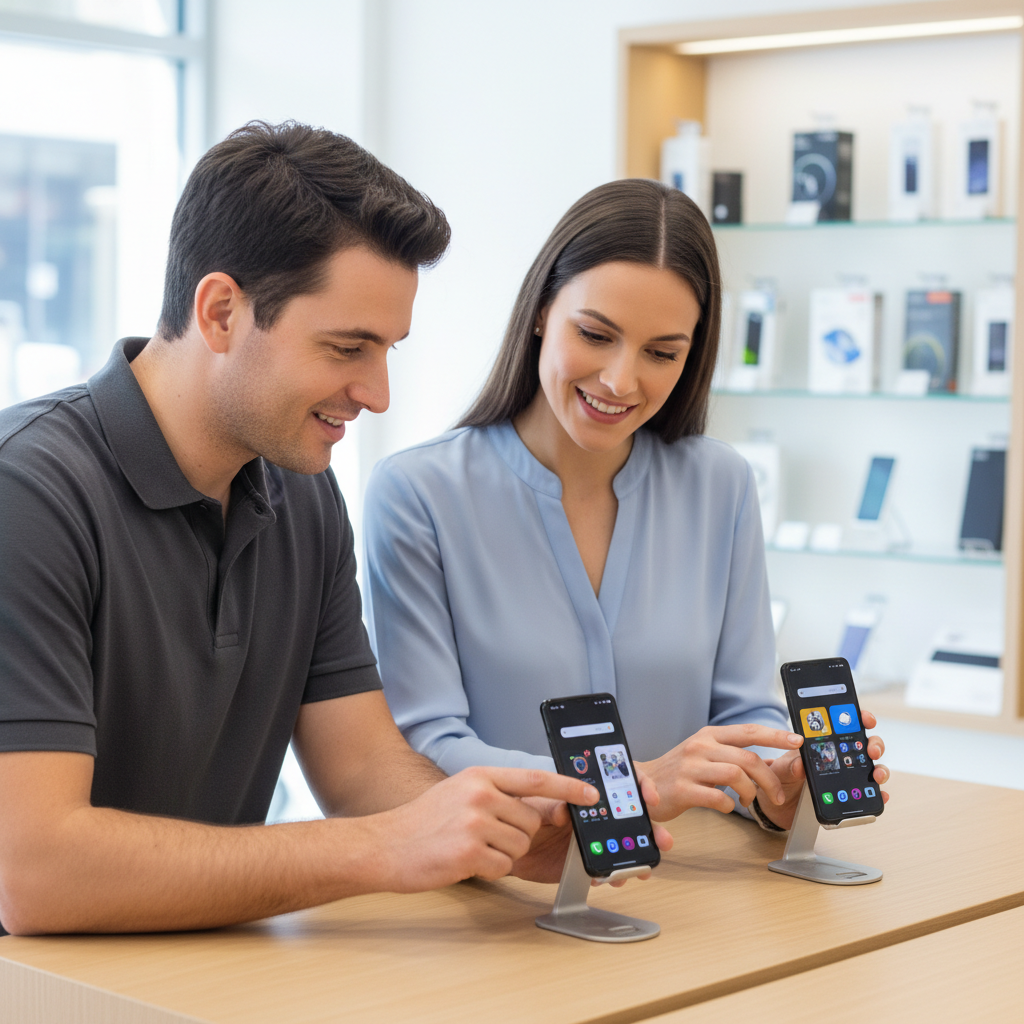
Think of the processor as the engine and RAM as your physical workspace. In 2026, marketing materials often focus on benchmarks, which are high speed sprints that do not reflect daily life. When you are navigating through Manti or multitasking between banking and social media, sustained performance is what keeps the device snappy. This year, the industry leaders are the 3nm and 4nm chips, specifically the Snapdragon 8 Gen 4 and the Apple A18 or A19 series. These chips are highly efficient, offering roughly 25% better power per watt than models from a few years ago. However, the best chip in the world will throttle, or slow down, if the phone lacks proper thermal management. A phone that stays cool under pressure will always outperform a faster phone that overheats after ten minutes of use.
RAM is where many buyers get tricked by large numbers. You will likely see advertisements for RAM extension or Virtual RAM. This is largely marketing fluff. It uses a portion of your phone’s internal storage to act as memory, but storage speeds are significantly slower than actual physical RAM. For the smartphone specs that actually matter 2026, physical RAM is the only number that dictates how many apps can stay open in the background.
User Profile | Recommended Physical RAM | Why It Matters |
|---|---|---|
Casual User | 8 GB | Smooth browsing, social media, and basic apps. |
Power User | 12 GB | Seamless multitasking and video editing. |
Gaming/AI | 12 GB | Provides the headroom needed for intensive local processing. |
Finally, the Neural Processing Unit (NPU) has become a standard requirement this year. While the CPU handles general tasks, the NPU is dedicated to AI functions like live translation and smart photo editing. A modern NPU ensures these advanced features do not drain your battery or lag your interface. If you need help determining if a specific model fits your needs, you can contact our team for a detailed breakdown of these components.
Display Quality: Brightness and Refresh Rates Over Resolution
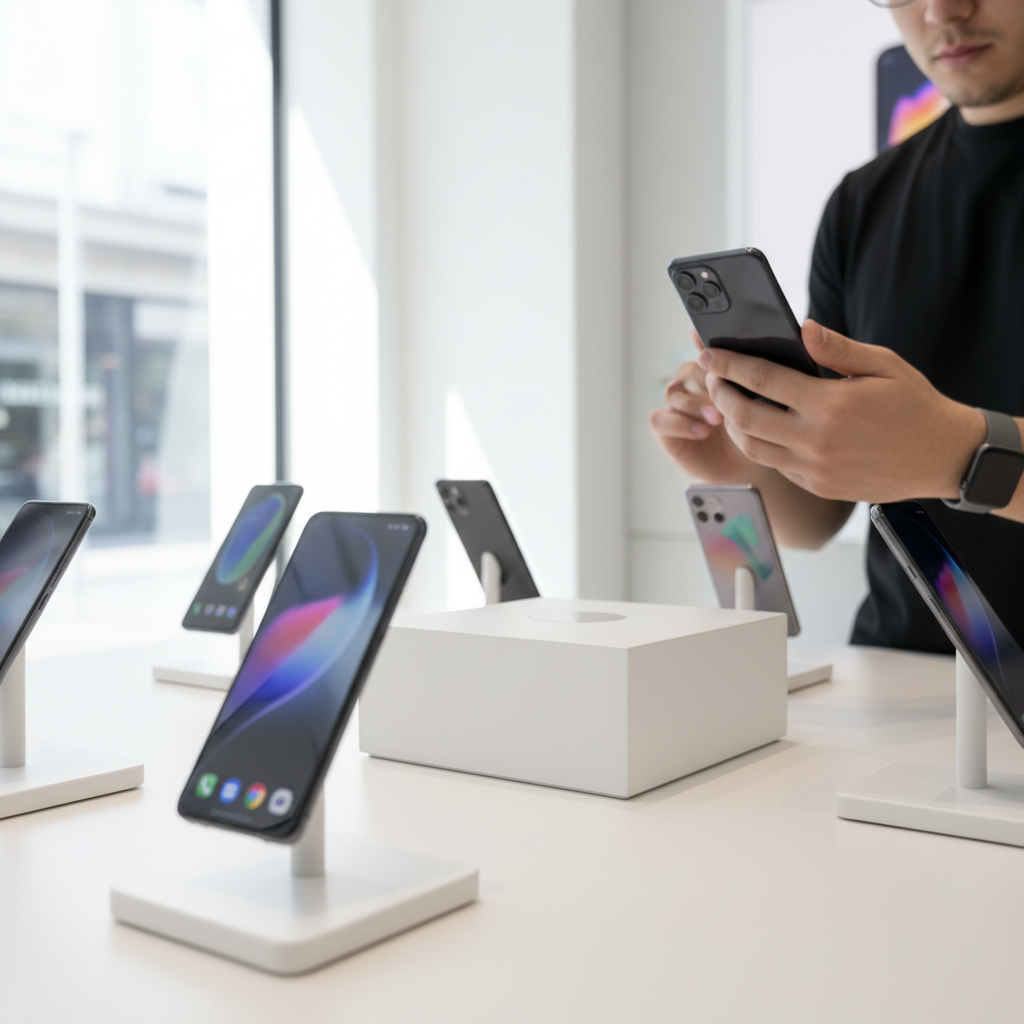
When comparing displays, do not get caught up in the resolution war. While marketing teams love to boast about 2K or 4K resolutions, the physical reality of a six inch screen means the human eye rarely perceives the difference once you cross the 400 pixels per inch threshold. Instead, true display quality comes down to how well you can see that screen while walking down Main Street in Ephraim at noon.
In the high altitude sunlight of Sanpete County, peak brightness is a critical metric. Look for a device that offers at least 1500 to 2000 nits of peak brightness. This ensures that text remains legible and maps stay visible even under direct Utah sun. Lower tier screens often wash out in these conditions, forcing you to hunt for shade just to read a text message.
Display Feature | Recommended Spec for 2026 | Why It Matters |
|---|---|---|
Peak Brightness | 1500 to 2000+ Nits | Outdoor visibility in bright Utah sunlight. |
Refresh Rate | 120Hz (LTPO) | Smooth scrolling and smart battery conservation. |
Panel Type | AMOLED / OLED | True blacks and superior power efficiency. |
A 120Hz refresh rate has become non-negotiable for a fluid experience. Specifically, look for LTPO (Low-Temperature Polycrystalline Oxide) technology. This allows the screen to dynamically scale from 1Hz to 120Hz, providing buttery smooth scrolling when you need it and dropping the rate to save energy when the screen is static. Finally, prioritize AMOLED panels over LCD. AMOLED allows individual pixels to turn off completely, providing deeper blacks and significantly better efficiency, which is one of the smartphone specs that actually matter 2026 for those who want their battery to last until evening.
The Camera Myth: Megapixels vs Sensor Size
While a vibrant display is the first thing you notice, the camera is often the primary deciding factor for our customers. Brands in 2026 are obsessed with marketing 200-megapixel sensors, but this is a classic case of quantity over quality. A higher megapixel count often results in crowded, tiny pixels that struggle to capture light, especially during a family dinner indoors or a late evening walk in Manti.
Among the smartphone specs that actually matter 2026, physical sensor size is the true indicator of photo quality. A larger sensor gathers more light, providing natural depth and better performance in low-light conditions. When comparing devices, look for a larger primary sensor rather than just a high number. This hardware works in tandem with computational photography, the software tuning that balances colors and reduces graininess.
Camera Feature | What to Look For | Real World Benefit |
|---|---|---|
Sensor Size | 1-inch or Large Format | Better low-light and natural background blur. |
Stabilization | Optical Image Stabilization (OIS) | Crisper photos and smoother video by reducing hand shake. |
Lens Variety | High-Quality Ultrawide | Fits more people and scenery into the shot. |
Avoid overpaying for extreme features like 100x digital zoom, which usually results in blurry, unusable images. Instead, prioritize Optical Image Stabilization (OIS) to ensure your shots remain sharp. OIS physically moves the lens to compensate for hand tremors, which is significantly more effective than software-based fixes alone. Most users find a reliable ultrawide lens far more practical for daily life than a telescope-tier zoom. If you want to see how these cameras perform in person, feel free to learn more about All Things Phones and visit us to test them out.
Battery Capacity vs Real World Longevity
While a sharp photo is great, it means little if your phone dies before you get home from a long day in Sanpete County. Most shoppers gravitate toward the 5000mAh label, assuming a bigger number always equals more time away from the plug. However, one of the smartphone specs that actually matter 2026 is chip efficiency rather than raw capacity. A 4500mAh battery paired with a modern 3nm processor, like the Snapdragon 8 Gen 4, often delivers significantly more screen-on time than a bulky 6000mAh battery on an older, less efficient chip. These newer chips offer roughly 25% better power efficiency, which translates to nearly two extra hours of actual usage.
Charging speed is another area where bigger numbers can be misleading. While 120W charging sounds impressive, these ultra-fast speeds generate significant heat that can degrade battery health over a three year period. For most of our customers, the 45W to 65W range is the convenience sweet spot. It provides enough power for a quick top-off before a drive to Manti without compromising the long-term health of the internal cell.
Feature | Ideal Spec | Why It Matters |
|---|---|---|
Processor Efficiency | 3nm or 4nm | Saves ~25% power per watt compared to older models. |
Practical Charging | 45W - 65W | Balances fast charging with long-term battery health. |
Real World Use | 10+ Hours SOT | Real-world screen-on time (SOT) beats raw mAh ratings. |
If your current device is struggling to hold a charge through the day, our team can help with device setup and support to optimize your settings or discuss upgrade options that prioritize efficiency.
Longevity and Connectivity: The Specs That Save You Money

While hardware efficiency preserves daily battery life, the software lifecycle determines how many years you can keep your phone before it becomes a paperweight. One of the smartphone specs that actually matter 2026 is the manufacturer’s commitment to OS upgrades. Major players like Samsung and Google now promise up to seven years of security patches and Android updates. Choosing a device with this level of support ensures your banking apps remain secure and your interface stays modern well into the late 2020s; this effectively lowers your cost of ownership by extending the time between upgrades.
Connectivity is the other half of the longevity equation. Not every 5G radio is built the same, which is a critical distinction for residents in rural Utah. Lower-tier models often lack the specific 5G bands used by local carriers to penetrate building walls or reach across the valleys between Manti and Ephraim. A phone that lacks broad band support will frequently drop to 4G or lose signal entirely in these areas. We recommend verifying that a device supports mid-band and low-band 5G to ensure reliable calling and data.
Feature | Standard Requirement | Long-Term Benefit |
|---|---|---|
OS Support | 5 to 7 Years | Security and app compatibility for the long haul. |
5G Bands | Sub-6GHz and Mid-Band | Fewer dropped calls in rural areas like Sanpete County. |
Security Updates | Monthly or Quarterly | Protection for banking and personal data. |
If you have questions about which models offer the best reception for your specific neighborhood, you can contact our team or stop by to learn more about All Things Phones. Making the right choice now prevents the frustration of a device that technically works but fails when you need it most. We can even help with device setup and support to ensure your new phone is fully optimized for our local network.
Common Mistakes to Avoid When Buying a Phone in 2026
Avoiding marketing traps is the final step in securing a reliable device. Even with knowledge of the smartphone specs that actually matter 2026, buyers often fall into these common pitfalls:
Brand Blindness: Sticking to one manufacturer out of habit can lead to missing better hardware at lower prices. Evaluate every device based on current performance rather than past reputation.
Storage Underestimation: While 128GB is the current bare minimum, it fills up quickly with modern app sizes and high-resolution media. We recommend 256GB as the practical baseline to prevent storage warnings and system slowdowns.
The Pro Feature Trap: Many users pay a steep premium for professional grade video features or niche sensors they will never open. Determine if you truly need those advanced tools before upgrading.
Ignoring Ergonomics: A spec sheet does not tell you if a phone is too heavy or uncomfortable for one-handed use during a busy day.
Visit us to learn more about All Things Phones and get a hands-on demo. Feeling the weight and grip of a device in person is essential before making a commitment. If you find the right fit, our team provides device setup and support to ensure your transition to a new phone is seamless and stress-free.
Choosing a new device in 2026 requires looking past the big numbers to focus on real world performance. By prioritizing meaningful features like battery optimization and software longevity, you can find a phone that truly serves your lifestyle. If you want expert help navigating these complex choices, you can learn more about our mission at All Things Phones. We are dedicated to providing clear guidance so you can shop with confidence, ensuring you always get the best value for your money.